

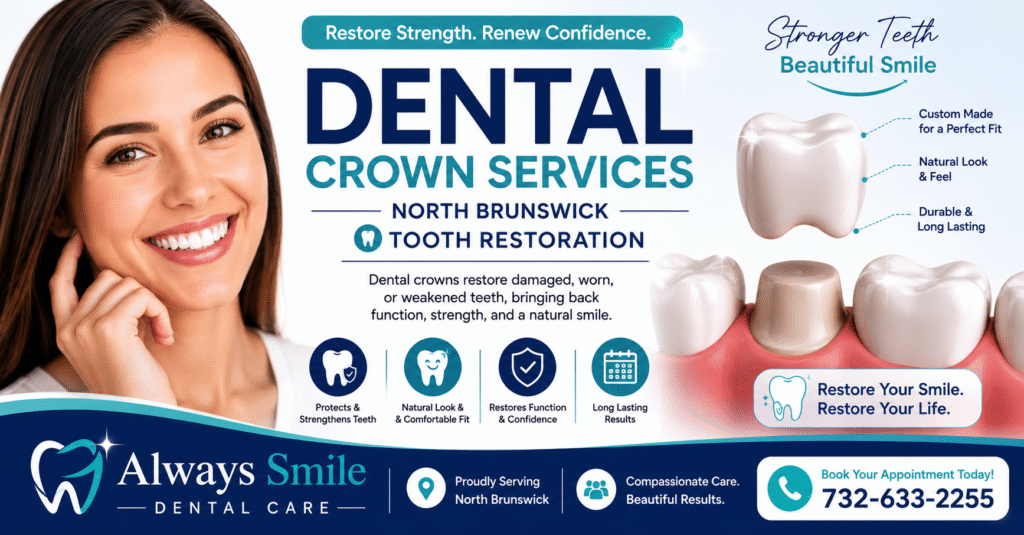
If you’ve ever felt a sharp twinge when biting, noticed a crack in your tooth, or worried that a large filling is “one hard snack away” from breaking, you’re not alone. Tooth damage is common—and the good news is that modern dentistry offers strong, natural-looking solutions to rebuild and protect your smile.
One of the most trusted options is a dental crown (often called a “cap”). A crown is a tooth-shaped restoration that covers and protects a damaged tooth (or sits on top of a dental implant), restoring strength, shape, and function.
In this guide, we’ll break down the top reasons to choose Dental Crown Services In North Brunswick for tooth restoration, what to expect during treatment, and how crowns can help you eat, speak, and smile with confidence again.
Table of Contents
- What is a dental crown (and when is it recommended)?
- Top reasons to choose dental crowns for tooth restoration
- Why local Dental Crown Services In North Brunswick can make a difference
- Types of crowns and how dentists help you choose
- What to expect during the crown process
- How long crowns last and how to care for them
- Cost and insurance considerations
- FAQs about dental crowns in North Brunswick
- Final thoughts + next steps
What Is a Dental Crown (and When Is It Recommended)?
A dental crown is a durable restoration designed to fit over a tooth that’s been weakened, damaged, or heavily restored. Think of it as a protective helmet for your tooth: it seals and shields the remaining structure while letting you bite and chew more normally.
Dentists commonly recommend crowns when:
- A tooth is cracked, fractured, or worn down
- There’s significant decay
- A tooth has a large filling and needs reinforcement
- You’ve had a root canal and the tooth needs protection
- You need to restore a tooth’s shape, strength, and appearance
Top Reasons to Choose Dental Crowns in North Brunswick for Tooth Restoration
1) Crowns Help Save Natural Teeth (Instead of Removing Them)
Whenever possible, preserving your natural tooth is ideal. Crowns often allow dentists to restore and protect a compromised tooth—so you can keep your original tooth structure rather than moving straight to extraction and replacement.
This matters because keeping your tooth can help maintain:
- Natural bite feel
- Jawbone support patterns
- Chewing efficiency and comfort
2) They Restore Strength for Confident Chewing
One of the biggest day-to-day benefits: you can chew more comfortably. Crowns reinforce weakened teeth so you can eat more normally again. Cleveland Clinic notes crowns can improve chewing function and protect worn, broken, or decayed teeth.
If you’re avoiding certain foods because of pain or fear of cracking a tooth further, a crown can be a major quality-of-life upgrade.
3) Crowns Protect Teeth After Root Canal Treatment
After a root canal, a tooth can become more vulnerable to fracture. A crown is often placed to help protect and restore that tooth for long-term function.
So if you’ve already invested in saving a tooth with endodontic treatment, a crown can be the “final step” that helps you keep that tooth stable and usable.
4) Excellent Option for Cracks, Chips, and Fractures
Cracks and fractures can spread—especially under biting pressure. A crown can hold the tooth together and reduce the risk of the damage worsening.
This is particularly helpful for:
- Molars that take heavy bite force
- Teeth with old fillings that have weakened the remaining enamel
- Teeth that have suffered trauma
5) A Crown Can Reinforce a Tooth with a Large Filling
Large fillings can weaken the tooth’s remaining structure. If a significant portion of the tooth has been restored with filling material, a crown can provide a sturdier, more protective solution—especially when the tooth is under strong chewing forces.
6) Natural-Looking Aesthetics (Yes, Even for Front Teeth)
Modern crowns can be made to look impressively lifelike. They can restore:
- Tooth shape and symmetry
- Color and brightness
- Overall smile harmony
If you have a tooth that’s discolored, misshapen, or visibly damaged, a crown can dramatically improve appearance while also strengthening the tooth.
7) Crowns Support Bridges and Other Restorations
Crowns don’t just restore single teeth—they’re also used as anchors for dental bridges (a restoration that replaces missing teeth by attaching to neighboring teeth). This is why crown and bridge services are often discussed together.
8) They Can Be Used on Top of Dental Implants
Crowns also restore the “tooth” portion of a dental implant. In implant-based restorations, the crown is what you see and chew with—it’s custom-made to match your smile.
9) Long-Lasting Restoration with Proper Care
Dental crowns are known for durability. Cleveland Clinic notes crowns can last between 5 and 15 years with proper care.
Clinical research on tooth-supported crowns also reports strong long-term survival rates over many years (with outcomes depending on materials, bite forces, hygiene, and other factors).
The takeaway: crowns are often a long-term solution—not a short-term patch.
10) Modern Materials Balance Beauty + Strength
Today’s crowns may be made from several materials, and newer options often combine aesthetics with durability. The American Dental Association notes that indirect restorative materials vary in properties and indications, and advances in stronger materials and digital fabrication are changing how care is delivered.
That means your dentist can help you choose a crown material that fits:
- Where the tooth is located (front vs back)
- How hard you bite
- Your cosmetic goals
- Budget considerations
11) Improves Bite Balance and Protects Neighboring Teeth
A damaged tooth can change how you bite. Over time, this may lead to uneven wear or discomfort. A properly made crown can restore the tooth’s correct height and contours, helping your bite feel more balanced and reducing strain.
12) Personalized Fit Using Today’s Techniques
Crowns are custom-made for your mouth. Dentists shape the tooth, take impressions (traditional or digital), and work with a lab to create a restoration that fits your bite and smile. The result is a tailored restoration—not a one-size-fits-all solution.
Why Choose Local Dental Crown Services In North Brunswick?
Choosing Dental Crown Services In North Brunswick isn’t only about the crown—it’s also about the ongoing care, convenience, and trust you build with a local dental team.
Here’s what many patients value when staying local:
Easier Follow-Ups and Adjustments
Even a well-made crown may need minor bite adjustments after placement. Having your provider nearby makes follow-up visits simpler—especially if you experience sensitivity or notice your bite feels “off.”
Access to Comprehensive Dentistry in One Place
Always Smile Dental Care highlights a wide set of services—from preventive care to restorative and emergency dentistry—making it easier to coordinate treatment plans if you need more than just a crown.
Emergency Support and Walk-In Convenience
Dental problems don’t always wait for a convenient day. The practice notes emergency dental care availability and encourages calling for urgent needs.
Patient-Centered Experience and Community Trust
The clinic’s website highlights a strong Google rating and emphasizes personalized care and modern technology.
Flexible Payment and Insurance Help
Cost is a real concern for many families. Always Smile Dental Care notes support with insurance claims and financing options (including CareCredit and Cherry).
Types of Dental Crowns: Which One Is Best?
Your dentist will recommend a crown type based on function, aesthetics, and your tooth’s condition. Common crown options include:
- Porcelain / ceramic crowns: Often chosen for front teeth due to natural appearance.
- Zirconia crowns: Known for strength and aesthetics, popular for back teeth.
- Porcelain-fused-to-metal (PFM): Combines a metal substructure with a porcelain exterior.
- Gold/metal crowns: Extremely durable, often used for molars where aesthetics are less critical.
Because materials vary in strength and clinical indications, your dentist will weigh bite pressure, cosmetic goals, and health factors when recommending the right fit.
What to Expect During the Crown Procedure
While each case is unique, many crown treatments follow a predictable path:
Step 1: Exam + Planning
Your dentist evaluates the tooth, may take X-rays, and confirms whether a crown is the right restoration (or if another option—like a filling, onlay, veneer, or extraction—is more appropriate).
Step 2: Tooth Preparation
The dentist shapes the tooth so the crown can fit properly. If there’s significant missing structure, a buildup may be needed to support the crown.
Step 3: Impression + Temporary Crown
An impression (traditional or digital) is taken so the crown can be custom-made. A temporary crown may protect the tooth in the meantime.
Step 4: Final Placement
Once the crown is ready, the dentist checks the fit, bite, and appearance, then cements it into place. The goal is a comfortable bite and natural look.
How Long Do Crowns Last (and How Do You Make Them Last Longer)?
As noted earlier, crowns may last 5–15 years (and sometimes longer) depending on materials, bite forces, and home care.
To protect your crown investment:
- Brush twice daily with a fluoride toothpaste
- Floss daily (yes—even around crowns)
- Avoid chewing ice and very hard candies
- If you grind your teeth, ask about a night guard
- Keep regular dental checkups and cleanings
Cost and Insurance: What Affects Crown Pricing?
Crown cost varies based on:
- Material choice (ceramic vs zirconia vs metal)
- Tooth location and complexity
- Whether additional work is needed (buildup, root canal, etc.)
- Lab and fabrication method
If you have dental insurance, coverage may depend on whether the crown is deemed medically necessary and the plan’s waiting periods/annual maximums. Some practices also help file claims and offer financing options—Always Smile Dental Care notes assistance with insurance claims and financing (CareCredit and Cherry).
FAQ
Most patients feel pressure rather than pain during treatment, since local anesthesia is used. Mild sensitivity afterward is common and usually temporary.
If the tooth is significantly weakened, cracked, or has a very large filling, a crown may be recommended for strength and protection. A dentist will confirm after an exam and imaging.
Yes. Many modern crowns are designed to match your surrounding teeth in color, shape, and translucency
This is typically fixable with a quick adjustment. That’s one reason choosing local Dental Crown Services In North Brunswick can be convenient for follow-ups.
It can happen (especially with older crowns), but dentists can often re-cement or replace it depending on the condition of the crown and tooth underneath.
Final Thoughts: Is a Dental Crown Right for You?
If you have a tooth that’s cracked, heavily filled, worn down, or weakened after root canal treatment, a crown can be one of the most reliable ways to restore strength and comfort—while keeping your smile looking natural.
For patients looking for Dental Crown Services In North Brunswick, consider a provider that combines restorative expertise, modern technology, and support with insurance/financing. Always Smile Dental Care positions itself around compassionate care, emergency availability, and flexible payment options.
Looking for reliable Dental Crown Services In North Brunswick? Visit Always Smile Dental Care today and restore your smile with expert care.
📍 2000 NJ-27, North Brunswick Township, NJ 08902
🌐 https://alwayssmiledentalcare.com/services/dental-crown-and-bridge-services-in-north-brunswick/
📞 (732) 633-2255
How To Get Dental Crown Services In North Brunswick (Step-by-Step Guide)
- Step 1: Book a Consultation with a Dentist
Start by scheduling an appointment with a trusted dental clinic like Always Smile Dental Care.
During this visit:
Your dentist will examine your tooth
X-rays may be taken
They will confirm if a dental crown is the right solution
Tip: Early consultation helps prevent further tooth damage. - Step 2: Tooth Preparation
Once your dentist confirms the need for a crown:
The damaged part of the tooth is removed
The tooth is reshaped to fit the crown
Local anesthesia ensures a painless procedure
This step ensures your crown fits securely and comfortably. - Step 3: Impression or Digital Scan
Your dentist will take an impression of your tooth using:
Traditional molds OR
Advanced digital scanning technology
This helps create a perfectly customized dental crown that matches your natural teeth. - Step 4: Temporary Crown Placement
While your permanent crown is being created:
A temporary crown is placed
It protects your tooth from sensitivity and damage
Avoid sticky or hard foods during this period. - Step 5: Permanent Crown Placement
Once your custom crown is ready:
The temporary crown is removed
The new crown is fitted and adjusted
It is permanently cemented into place
Your dentist ensures:
Proper bite alignment
Natural appearance
Long-lasting comfort - Step 6: Follow Aftercare Instructions
To extend the life of your crown:
Brush and floss daily
Avoid chewing hard objects
Visit your dentist regularly
With proper care, your crown can last 10–15 years or more.
