

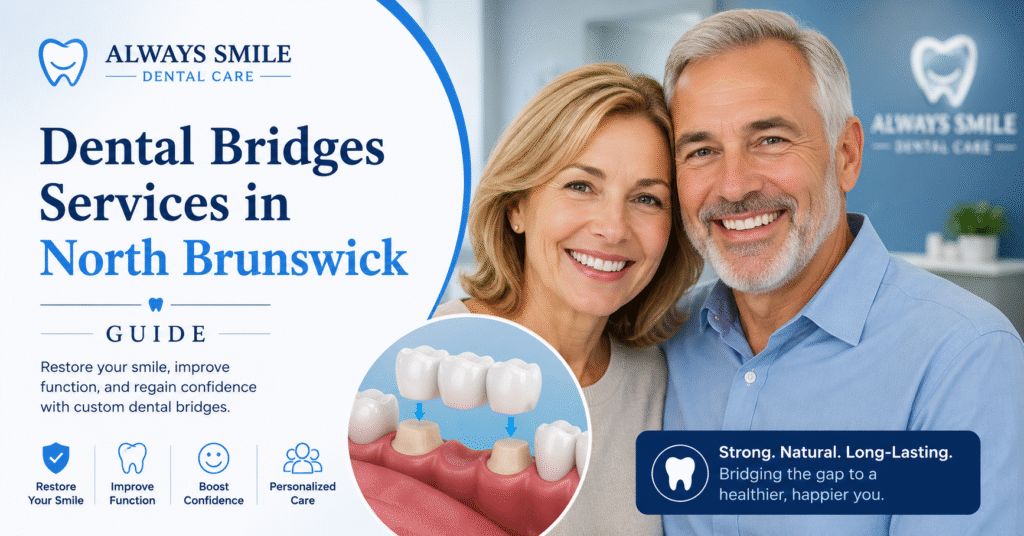
Missing teeth can impact more than just your smile—they can affect your ability to chew, speak, and maintain proper oral health. Fortunately, modern dentistry offers effective solutions, and one of the most reliable options is dental bridges. If you’re exploring Dental Bridges Services In North Brunswick, this comprehensive guide will help you understand everything—from types and benefits to cost and procedure.
Whether you’ve recently lost a tooth or are considering long-term restorative options, this guide is designed to provide clear, actionable insights to help you make the best decision for your oral health.
What Are Dental Bridges?
A dental bridge is a fixed dental restoration used to replace one or more missing teeth by “bridging” the gap between adjacent teeth. It consists of one or more artificial teeth (pontics) anchored by crowns on neighboring natural teeth or dental implants.
Dental bridges are fixed dental restorations used to replace one or more missing teeth by anchoring artificial teeth to adjacent natural teeth or implants. Dental Bridges Services In North Brunswick help restore chewing ability, improve appearance, and prevent surrounding teeth from shifting.
Dental bridges are a popular solution because they restore both function and aesthetics, helping patients regain confidence in their smile.
Types of Dental Bridges:
- Traditional Dental Bridges
- Cantilever Bridges
- Maryland Bonded Bridges
- Implant-Supported Bridges
Why You May Need Dental Bridges
Missing teeth can lead to several complications if not addressed promptly. Here’s why opting for Dental Bridges Services In North Brunswick is essential:
1. Prevent Teeth Shifting
When a tooth is lost, surrounding teeth may shift into the empty space, causing misalignment.
2. Restore Chewing Ability
Missing teeth can make it difficult to chew certain foods properly, impacting digestion and nutrition.
3. Improve Speech
Teeth play a vital role in pronunciation. Gaps can lead to speech issues like slurring.
4. Maintain Facial Structure
Tooth loss can lead to bone deterioration, affecting facial appearance over time.
5. Enhance Aesthetics
Dental bridges restore your smile, making it look natural and complete.
Types of Dental Bridges
Understanding the different types of dental bridges can help you choose the right option based on your needs and budget.
1. Traditional Dental Bridges
This is the most common type. It involves placing crowns on the adjacent teeth with a pontic in between.
Best for: Patients with strong natural teeth on both sides of the gap.
2. Cantilever Bridges
Used when there is only one adjacent tooth available for support.
Best for: Areas of the mouth that experience less pressure, such as front teeth.
3. Maryland Bonded Bridges
These use a metal or porcelain framework bonded to the back of adjacent teeth instead of crowns.
Best for: Patients seeking a conservative, less invasive option.
4. Implant-Supported Bridges
These bridges are supported by dental implants rather than natural teeth.
Best for: Patients missing multiple teeth and looking for a long-lasting solution.
Benefits of Dental Bridges
Choosing Dental Bridges Services In North Brunswick offers numerous advantages:
1. Natural Appearance
Modern materials ensure your bridge blends seamlessly with your natural teeth.
2. Durability
With proper care, dental bridges can last 10–15 years or longer.
3. Quick Procedure
Compared to implants, bridges require less time to complete.
4. Non-Surgical Option
Traditional bridges do not require surgery, making them ideal for many patients.
5. Cost-Effective
Bridges are generally more affordable than implants.
Step-by-Step Procedure for Dental Bridges
Here’s what you can expect when undergoing dental bridge treatment:
Step 1: Initial Consultation
Your dentist evaluates your oral health, takes X-rays, and discusses treatment options.
Step 2: Tooth Preparation
Adjacent teeth are reshaped to accommodate crowns.
Step 3: Impressions
A mold of your teeth is taken to create a custom-fit bridge.
Step 4: Temporary Bridge Placement
A temporary bridge is placed to protect exposed teeth.
Step 5: Permanent Bridge Placement
Once ready, the permanent bridge is cemented in place.
Cost of Dental Bridges in North Brunswick
The cost of Dental Bridges Services In North Brunswick can vary based on several factors:
Average Cost Range:
- Traditional Bridges: $2,000 – $5,000
- Maryland Bridges: $1,500 – $2,500
- Implant-Supported Bridges: $5,000 – $15,000
Factors Affecting Cost:
- Number of teeth being replaced
- Type of materials used (porcelain, metal, zirconia)
- Dentist’s expertise
- Additional procedures (e.g., root canals, implants)
- Insurance coverage
Dental Bridges vs Dental Implants
| Feature | Dental Bridges | Dental Implants |
|---|---|---|
| Procedure | Non-surgical (most cases) | Surgical |
| Cost | Lower upfront cost | Higher upfront cost |
| Longevity | 10–15 years | 20+ years |
| Bone Preservation | Limited | Excellent |
| Time Required | 2–3 weeks | Several months |
Conclusion: Bridges are ideal for quick and cost-effective solutions, while implants are better for long-term durability.
How to Care for Your Dental Bridge
Proper care ensures the longevity of your dental bridge:
Daily Care Tips:
- Brush twice daily using fluoride toothpaste
- Floss under the bridge using a floss threader
- Use an antibacterial mouthwash
Lifestyle Tips:
- Avoid hard or sticky foods
- Quit smoking
- Schedule regular dental checkups
Who Is a Good Candidate for Dental Bridges?
You may be an ideal candidate if you:
- Have one or more missing teeth
- Have healthy adjacent teeth or implants
- Maintain good oral hygiene
- Are looking for a non-surgical solution
Risks and Considerations
While dental bridges are highly effective, there are some considerations:
- Tooth sensitivity after placement
- Risk of decay under crowns if hygiene is poor
- Possible need for replacement over time
Choosing a skilled dentist for Dental Bridges Services In North Brunswick minimizes these risks significantly.
Why Choose Professional Dental Bridge Services?
Selecting a trusted dental clinic ensures:
- Accurate diagnosis and treatment planning
- High-quality materials
- Long-lasting results
- Personalized care
For expert care and reliable treatment, visit:
https://alwayssmiledentalcare.com/services/dental-crown-and-bridge-services-in-north-brunswick/
How Long Do Dental Bridges Last?
On average, dental bridges last between 10 to 15 years. However, with excellent oral hygiene and regular dental visits, they can last even longer.
Factors affecting longevity:
- Oral hygiene habits
- Quality of materials used
- Bite alignment
- Regular dental check-ups
Common Myths About Dental Bridges
Myth 1: Bridges Look Fake
Modern bridges are designed to look completely natural.
Myth 2: The Procedure Is Painful
The process is minimally invasive and performed under local anesthesia.
Myth 3: Bridges Don’t Last Long
With proper care, they can last over a decade.
FAQs About Dental Bridges
1. Are dental bridges permanent?
They are fixed restorations but may need replacement after several years.
2. Can I eat normally with a bridge?
Yes, after a short adjustment period.
3. Is the procedure painful?
No, it is typically painless with anesthesia.
4. How soon can I get a dental bridge?
Most procedures are completed within 2–3 weeks.
5. Does insurance cover dental bridges?
Many insurance plans partially cover the cost.
How to Choose the Right Dental Clinic in North Brunswick
When selecting a provider for Dental Bridges Services In North Brunswick, consider:
- Experience and qualifications of the dentist
- Patient reviews and testimonials
- Technology and equipment used
- Transparency in pricing
- Personalized consultation approach
Final Thoughts
Dental bridges are a proven and effective solution for replacing missing teeth, restoring both function and aesthetics. Whether you’re dealing with a single missing tooth or multiple gaps, Dental Bridges Services In North Brunswick provide a reliable, affordable, and minimally invasive option.
If you’re ready to restore your smile and improve your oral health, consult a professional dental clinic today and explore the best treatment plan tailored to your needs.
If you are looking for reliable Dental Bridges Services In North Brunswick, Always Smile Dental Care provides expert solutions tailored to restore your smile with precision and care in North Brunswick, NJ.
How to Get Dental Bridges Services In North Brunswick
- Book a Dental Consultation
Visit a professional dentist in North Brunswick for an oral examination and X-rays
- Evaluate Treatment Plan
Your dentist will recommend the best type of dental bridge based on your condition.
- Prepare Adjacent Teeth
The supporting teeth are reshaped to fit dental crowns.
- Take Impressions
A mold is taken to create a custom-fit dental bridge.
- Temporary Bridge Placement
A temporary bridge is placed to protect your teeth.
- Permanent Bridge Placement
The final bridge is fitted and cemented securely.
- Follow Aftercare Instructions
Maintain oral hygiene and visit your dentist regularly.
Frequently Asked Questions (FAQs)
Dental bridges are fixed dental restorations used to replace one or more missing teeth. They work by anchoring artificial teeth (pontics) to adjacent natural teeth or dental implants, effectively “bridging” the gap and restoring function and appearance.
Who is a good candidate for Dental Bridges Services In North Brunswick?
You are a good candidate if you have one or more missing teeth, healthy adjacent teeth or implants, and good overall oral health. Patients looking for a non-surgical and cost-effective solution often prefer dental bridges.
How much do Dental Bridges Services In North Brunswick cost?
The cost typically ranges between $1,500 to $15,000, depending on the type of bridge, materials used, and complexity of the case. Traditional bridges are more affordable, while implant-supported bridges are more expensive.
How long do dental bridges last?
Dental bridges usually last between 10 to 15 years, but with proper oral hygiene and regular dental checkups, they can last even longer.
Are dental bridges better than dental implants?
Dental bridges are more affordable and quicker to install, while dental implants offer better durability and bone preservation. The best option depends on your oral condition, budget, and long-term goals.
Is the dental bridge procedure painful?
No, the procedure is generally painless as it is performed under local anesthesia. Some mild sensitivity may occur after the procedure, but it typically subsides within a few days.
How long does it take to get a dental bridge?
The process usually takes 2 to 3 weeks, including consultation, tooth preparation, impressions, and final placement of the bridge.
What are the different types of dental bridges available?
The main types include:
Traditional Dental Bridges
Cantilever Bridges
Maryland Bonded Bridges
Implant-Supported Bridges
Each type is recommended based on the patient’s dental condition.
Can I eat normally with a dental bridge?
Yes, after a short adjustment period, you can eat normally. However, it’s recommended to avoid very hard or sticky foods to maintain the longevity of the bridge.
How do I care for my dental bridge?
Maintain good oral hygiene by brushing twice daily, flossing under the bridge using a floss threader, and visiting your dentist regularly for checkups and cleanings.
Will a dental bridge look natural?
Yes, modern dental bridges are designed using high-quality materials like porcelain, ensuring they blend seamlessly with your natural teeth.
Are dental bridges covered by insurance?
Many dental insurance plans partially cover dental bridges, especially if they are considered medically necessary. Coverage varies depending on your provider.
What happens if I don’t replace a missing tooth?
Leaving a gap can cause surrounding teeth to shift, leading to bite problems, jaw pain, and bone loss. It can also affect your appearance and ability to chew properly.
Can dental bridges be replaced or repaired?
Yes, dental bridges can be repaired or replaced if they become damaged or worn over time. Regular dental visits help detect issues early.
Why should I choose Dental Bridges Services In North Brunswick?
Choosing a professional dental clinic in North Brunswick ensures expert care, advanced technology, personalized treatment plans, and long-lasting results tailored to your needs.
