

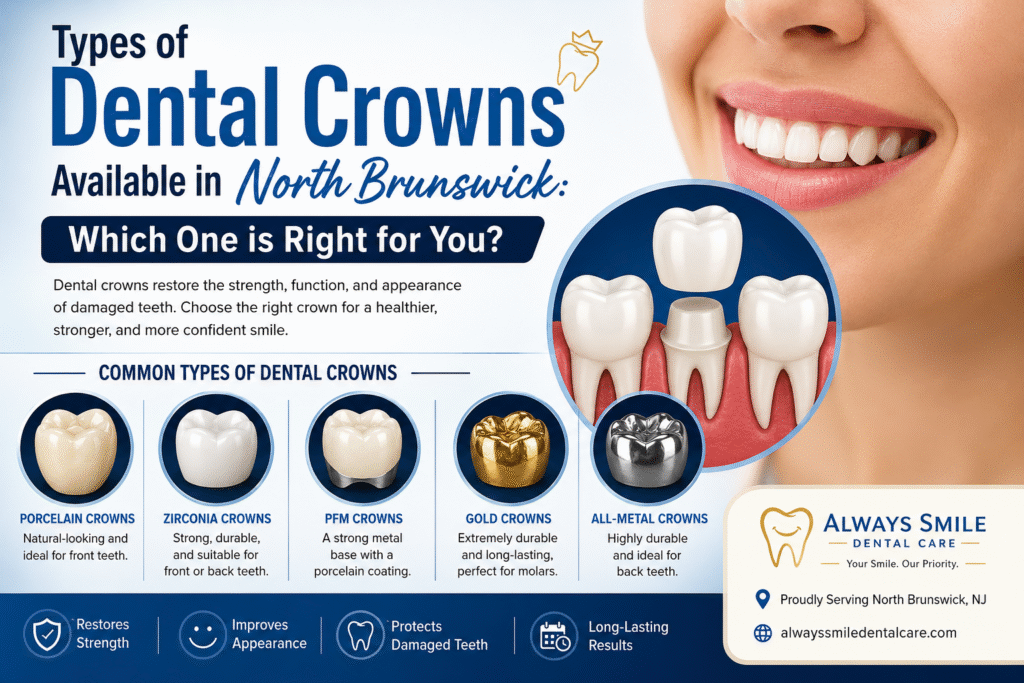
A damaged, cracked, weakened, or severely decayed tooth can impact both your oral health and your confidence. Fortunately, modern dentistry offers effective solutions to restore the strength, function, and appearance of your teeth. One of the most popular restorative treatments available today is a dental crown.
If you’re considering Dental Crown Services In North Brunswick, understanding the different types of dental crowns available can help you make an informed decision about your oral health. Each crown material comes with unique benefits, aesthetics, durability levels, and costs. The right choice depends on your specific dental needs, budget, and lifestyle.
At Always Smile Dental Care, patients have access to high-quality crown and bridge restorations designed to restore damaged teeth while maintaining a natural appearance. Whether you need to protect a weakened tooth, cover a dental implant, or improve your smile, choosing the right dental crown is an important step toward long-term oral health.
What Is a Dental Crown?
A dental crown is a custom-made cap that completely covers a damaged or weakened tooth. It restores the tooth’s shape, size, strength, and appearance while protecting it from further damage.
Dental crowns are commonly recommended for:
- Severely decayed teeth
- Cracked or fractured teeth
- Teeth weakened after root canal treatment
- Large fillings that compromise tooth structure
- Dental implants
- Cosmetic smile improvements
- Worn-down teeth due to grinding
Crowns not only improve aesthetics but also help restore normal chewing and speaking functions.
Why Patients Choose Dental Crown Services In North Brunswick
Patients seek Dental Crown Services In North Brunswick for several reasons:
Restoring Damaged Teeth
Crowns provide structural support for teeth that have been weakened by decay, trauma, or extensive dental work.
Improving Appearance
Modern crowns closely mimic natural teeth, enhancing your smile and boosting confidence.
Protecting Root Canal Treated Teeth
After root canal therapy, teeth can become brittle. A crown helps protect the treated tooth from fractures.
Replacing Missing Teeth
Dental crowns are often used with dental implants and bridges to replace missing teeth and restore oral function.
Long-Term Durability
With proper care, dental crowns can last 10 to 15 years or even longer.
Types of Dental Crowns Available in North Brunswick
Several crown materials are available today, each designed to meet different patient needs. Understanding the advantages and limitations of each option can help determine which crown is right for you.
1. Porcelain Crowns
Porcelain crowns are among the most popular choices for patients seeking natural-looking restorations.
Benefits of Porcelain Crowns
- Exceptional aesthetics
- Closely match natural tooth color
- Metal-free restoration
- Ideal for front teeth
- Biocompatible with gum tissue
Because porcelain reflects light similarly to natural enamel, these crowns are often recommended for visible areas of the mouth.
Best For:
- Front teeth restorations
- Cosmetic smile enhancements
- Patients with metal allergies
- Highly visible teeth
Considerations
While porcelain crowns offer excellent aesthetics, they may not be as strong as some other materials when subjected to heavy biting forces.
2. Zirconia Crowns
Zirconia crowns have become increasingly popular because they combine strength with attractive aesthetics.
Zirconia is a durable ceramic material known for its fracture resistance and longevity.
Benefits of Zirconia Crowns
- Extremely strong and durable
- Resistant to chipping and cracking
- Natural appearance
- Suitable for front and back teeth
- Long-lasting performance
Modern zirconia crowns offer improved translucency, making them more aesthetically pleasing than earlier versions.
Best For:
- Molars and premolars
- Patients who grind their teeth
- Long-term restorations
- High-stress chewing areas
Considerations
Although newer zirconia crowns look highly natural, some cosmetic cases may still benefit from porcelain alternatives for maximum translucency.
3. Porcelain-Fused-to-Metal (PFM) Crowns
Porcelain-fused-to-metal crowns have been a trusted restorative solution for decades.
These crowns feature a metal framework covered with a porcelain outer layer.
Benefits of PFM Crowns
- Strong internal metal support
- Natural-looking exterior
- Suitable for front and back teeth
- Proven long-term performance
- Cost-effective option
Best For:
- Patients seeking a balance of strength and aesthetics
- Restoring chewing teeth
- Long-term dental restorations
Considerations
Over time, gum recession may reveal a thin metal line near the gumline, which can affect aesthetics.
4. Gold Crowns
Gold crowns remain one of the strongest and longest-lasting dental restorations available.
Although less common today due to aesthetic concerns, they continue to be an excellent option for certain situations.
Benefits of Gold Crowns
- Exceptional durability
- Minimal wear on opposing teeth
- Resistant to fractures
- Long lifespan
- Requires less tooth removal
Best For:
- Back molars
- Patients prioritizing durability
- Heavy bite pressure areas
Considerations
The primary drawback is their metallic appearance, making them less suitable for visible teeth.
5. All-Metal Crowns
All-metal crowns may be made from gold alloys or other metal combinations.
Benefits
- Outstanding strength
- Minimal risk of breakage
- Long-lasting performance
- Thin design preserves more natural tooth structure
Best For
- Back teeth
- Patients with severe tooth wear
- Areas with strong chewing forces
Considerations
Like gold crowns, aesthetics are their biggest limitation.
6. E-Max Crowns (Lithium Disilicate Crowns)
E-Max crowns are considered one of the most advanced ceramic restorations available today.
They are made from lithium disilicate glass ceramic, known for both beauty and strength.
Benefits of E-Max Crowns
- Superior aesthetics
- Natural translucency
- Excellent durability
- Metal-free design
- Ideal for cosmetic dentistry
Best For:
- Front teeth
- Smile makeover procedures
- Cosmetic restorations
Considerations
Although highly durable, E-Max crowns may not always be the first choice for patients with severe grinding habits.
How to Choose the Right Dental Crown
Selecting the ideal crown depends on several factors.
Tooth Location
Front teeth generally require highly aesthetic crowns such as porcelain or E-Max crowns.
Back teeth often benefit from stronger materials such as zirconia or metal crowns.
Cosmetic Goals
Patients seeking the most natural appearance usually prefer:
- Porcelain crowns
- E-Max crowns
- Premium zirconia crowns
Durability Requirements
For heavy chewing pressure or teeth grinding:
- Zirconia crowns
- Gold crowns
- Metal crowns
may provide the greatest longevity.
Budget Considerations
Different crown materials vary in cost.
Your dentist can discuss options that fit both your treatment goals and financial preferences.
Allergies and Sensitivities
Patients with metal sensitivities often choose:
- Porcelain crowns
- Zirconia crowns
- E-Max crowns
These materials offer excellent biocompatibility.
What to Expect During the Dental Crown Procedure
Patients seeking Dental Crown Services In North Brunswick can expect a comfortable and streamlined process.
Step 1: Consultation and Examination
Your dentist evaluates the affected tooth and determines whether a crown is the best treatment option.
Step 2: Tooth Preparation
The damaged tooth is carefully reshaped to create space for the crown.
Step 3: Digital Impressions
Precise impressions are taken to ensure a perfect fit.
Step 4: Temporary Crown
A temporary crown may be placed while your permanent restoration is being fabricated.
Step 5: Crown Placement
Once ready, the permanent crown is bonded securely to the tooth.
The result is a strong, functional, and natural-looking restoration.
How Long Do Dental Crowns Last?
The lifespan of a dental crown depends on several factors:
- Material used
- Oral hygiene habits
- Bite forces
- Teeth grinding habits
- Regular dental visits
Average lifespan:
- Porcelain crowns: 10–15 years
- Zirconia crowns: 15+ years
- Gold crowns: 20+ years
- PFM crowns: 10–15 years
With proper care, many crowns exceed these estimates.
Caring for Your Dental Crown
To maximize the lifespan of your restoration:
Brush Twice Daily
Use a soft-bristled toothbrush and fluoride toothpaste.
Floss Every Day
Pay special attention to the crown margins.
Avoid Hard Foods
Limit chewing on ice, hard candies, and non-food objects.
Wear a Night Guard
If you grind your teeth, a custom night guard can protect your crown.
Schedule Regular Dental Checkups
Routine examinations help detect any issues early.
Signs You May Need a Dental Crown
You may benefit from Dental Crown Services In North Brunswick if you experience:
- Cracked teeth
- Large cavities
- Broken fillings
- Tooth sensitivity
- Severe tooth wear
- Root canal treatment
- Cosmetic imperfections
Prompt treatment can prevent further damage and preserve your natural tooth.
Why Choose Always Smile Dental Care for Dental Crowns?
When choosing a provider for Dental Crown Services In North Brunswick, experience, technology, and patient care matter.
Always Smile Dental Care provides personalized restorative treatments designed to restore both oral health and confidence. Their crown and bridge services focus on delivering durable, natural-looking results that blend seamlessly with your smile. Patients benefit from modern dental technology, compassionate care, and customized treatment plans tailored to their unique needs.
Final Thoughts
Dental crowns remain one of the most effective ways to restore damaged, weakened, or cosmetically compromised teeth. With several crown materials available—including porcelain, zirconia, PFM, gold, all-metal, and E-Max crowns—patients have more options than ever before.
The best crown for you depends on your oral health needs, aesthetic preferences, lifestyle, and budget. A consultation with an experienced dentist can help determine which restoration will provide the ideal balance of beauty, strength, and longevity.
If you’re considering Dental Crown Services In North Brunswick, choosing a trusted dental provider can ensure lasting results and a healthier, more confident smile for years to come.
Porcelain and E-Max crowns are typically the best options for front teeth because they provide the most natural appearance.
Most dental crowns last between 10 and 15 years, while zirconia and gold crowns may last 20 years or more with proper care.
Zirconia crowns are generally stronger, while porcelain crowns often offer superior aesthetics for highly visible teeth.
Dental crown procedures are usually comfortable because local anesthesia is used during treatment.
A crown may need replacement if it becomes loose, cracked, worn, or develops decay underneath.
How to Choose the Right Dental Crown in North Brunswick
Choosing the right dental crown is an important decision that affects your oral health, comfort, appearance, and long-term dental costs. Follow these steps to determine which dental crown is best for your needs.
- Step 1: Schedule a Dental Consultation
Visit a qualified dentist offering Dental Crown Services In North Brunswick to evaluate the condition of your tooth. The dentist will assess the extent of damage, decay, or wear and recommend appropriate crown options.
- Step 2: Identify the Location of the Tooth
Determine whether the crown is needed for a front tooth or a back tooth.
Front teeth typically benefit from porcelain or E-Max crowns for superior aesthetics.
Back teeth often require stronger materials such as zirconia or metal crowns due to higher chewing forces. - Step 3: Consider Your Cosmetic Goals
If maintaining a natural-looking smile is your priority, discuss tooth-colored crown options with your dentist.
Popular cosmetic crown choices include:
Porcelain Crowns
E-Max Crowns
Zirconia Crowns
These materials closely resemble natural teeth and blend seamlessly with your smile. - Step 4: Evaluate Durability Requirements
Patients who grind their teeth or place heavy pressure on their teeth should prioritize durability.
Recommended options include:
Zirconia Crowns
Gold Crowns
Porcelain-Fused-to-Metal Crowns
These materials offer excellent strength and long-term performance. - Step 5: Review Your Budget
Different crown materials vary in cost. Discuss available options and insurance coverage with your dental provider to find a restoration that meets both your oral health needs and financial goals.
- Step 6: Discuss Material Allergies or Sensitivities
If you have metal allergies or sensitivities, ask your dentist about metal-free alternatives such as:
Porcelain Crowns
Zirconia Crowns
E-Max Crowns
These options provide excellent biocompatibility and aesthetics. - Step 7: Get Digital Impressions and Crown Preparation
Once the crown type is selected, your dentist will prepare the tooth and take digital impressions to ensure a precise fit. A temporary crown may be placed until your permanent restoration is ready.
- Step 8: Have Your Permanent Crown Placed
During your final appointment, the custom crown will be fitted, adjusted, and securely bonded to your tooth. Your dentist will check your bite and ensure maximum comfort and function.
- Step 9: Maintain Your Dental Crown
Protect your investment by:
Brushing twice daily
Flossing around the crown
Avoiding hard foods and ice chewing
Wearing a night guard if you grind your teeth
Visiting your dentist regularly for checkups - Step 10: Enjoy a Stronger, Healthier Smile
With proper care and regular dental visits, your dental crown can provide years of protection, functionality, and natural-looking aesthetics while preserving your oral health.
