

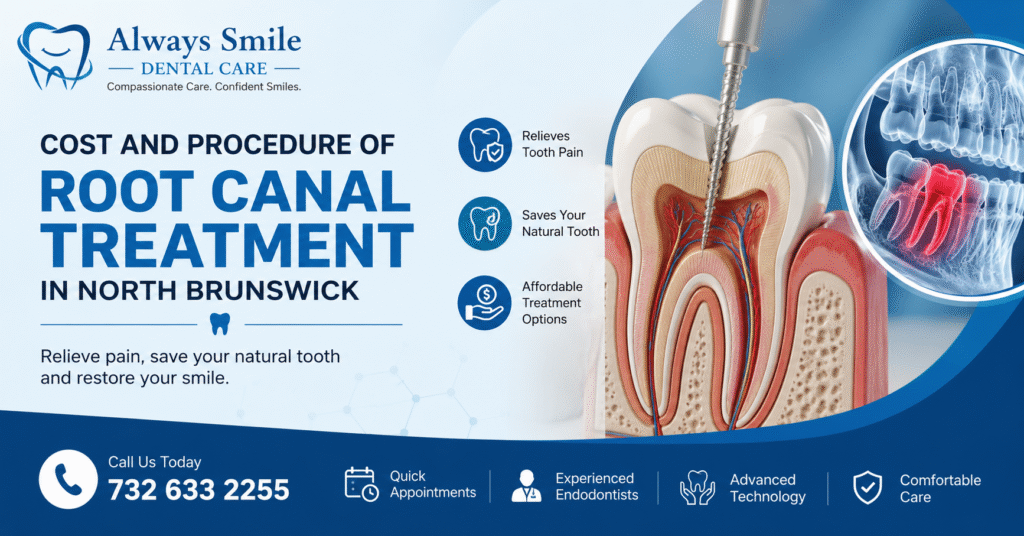
Root Canal Treatment In North Brunswick: Everything You Need to Know About Cost, Procedure, Benefits, and Recovery
A severe toothache can disrupt your daily life, making it difficult to eat, sleep, or concentrate. In many cases, persistent tooth pain is a sign of an infected or damaged tooth pulp that requires immediate dental attention. Fortunately, modern Root Canal Treatment In North Brunswick offers a safe, effective, and virtually painless solution to save your natural tooth and restore your oral health.
At Always Smile Dental Care, patients receive compassionate and advanced dental care from experienced professionals dedicated to preserving natural teeth whenever possible. Led by Dr. Farida Fanuswala, the practice focuses on providing comfortable, patient-centered treatments using modern dental technology.
This comprehensive guide explains everything you need to know about the cost, procedure, benefits, recovery process, and frequently asked questions related to Root Canal Treatment In North Brunswick.
What Is a Root Canal Treatment?
A root canal is a dental procedure designed to remove infected, inflamed, or damaged pulp from inside a tooth. The pulp contains nerves, blood vessels, and connective tissue that help a tooth develop during its early stages.
When bacteria enter the pulp through deep decay, cracks, trauma, or repeated dental procedures, infection can occur. Without treatment, the infection may spread to surrounding tissues, causing severe pain, abscesses, and even tooth loss.
A root canal procedure removes the infection while preserving the natural tooth structure.
Why Might You Need Root Canal Treatment In North Brunswick?
Several dental conditions can make a root canal necessary.
Common Signs Include:
- Persistent tooth pain
- Severe sensitivity to hot or cold foods
- Pain while chewing
- Swollen or tender gums
- Darkening or discoloration of a tooth
- Recurring pimples on the gums
- Tooth abscess
- Facial swelling
Ignoring these symptoms may lead to worsening infection and more extensive treatment requirements.
Causes of Tooth Pulp Infection
The most common causes include:
Deep Tooth Decay
Untreated cavities can penetrate deep into the tooth and reach the pulp.
Cracked Teeth
Even tiny cracks can allow bacteria to enter the inner tooth structure.
Dental Trauma
A sports injury, accident, or fall may damage the pulp.
Repeated Dental Procedures
Multiple fillings or restorations on the same tooth can weaken and inflame the pulp over time.
Advanced Gum Disease
Severe periodontal disease can contribute to infection around the tooth roots.
The Step-by-Step Procedure of Root Canal Treatment In North Brunswick
Many patients become anxious when they hear the term “root canal.” However, modern dentistry has made root canal therapy significantly more comfortable than in the past.
Here’s what you can expect during your treatment.
Step 1: Comprehensive Examination
Your dentist begins with:
- Clinical evaluation
- Digital X-rays
- Assessment of infection severity
- Discussion of symptoms and treatment options
This helps determine whether a root canal is the best solution for your condition.
Step 2: Local Anesthesia
The treatment area is completely numbed using local anesthesia.
Most patients report that a root canal feels similar to receiving a dental filling.
Step 3: Isolation of the Tooth
A dental dam is placed around the tooth to keep the area clean and dry during the procedure.
Step 4: Access Opening
The dentist creates a small opening in the top of the tooth to access the infected pulp chamber.
Step 5: Removal of Infected Pulp
Specialized instruments are used to:
- Remove infected tissue
- Clean the root canals
- Eliminate bacteria
- Remove debris
This step is crucial for stopping the infection.
Step 6: Shaping and Disinfection
The canals are carefully shaped and disinfected to ensure all bacteria are eliminated.
Advanced irrigation techniques help clean areas that instruments cannot easily reach.
Step 7: Filling the Root Canals
The cleaned canals are filled with a biocompatible material called gutta-percha.
This seals the canals and prevents future bacterial contamination.
Step 8: Restoration of the Tooth
A filling or dental crown is placed to restore the tooth’s strength and function.
In many cases, molars and heavily damaged teeth require crowns for long-term protection.
How Long Does Root Canal Treatment Take?
The duration depends on:
- Number of canals
- Severity of infection
- Tooth location
- Complexity of treatment
Typical treatment times include:
Front Teeth
30–60 minutes
Premolars
60–90 minutes
Molars
90–120 minutes
Some complex cases may require multiple appointments.
Cost of Root Canal Treatment In North Brunswick
One of the most common questions patients ask is:
“How much does Root Canal Treatment In North Brunswick cost?”
The answer depends on several factors.
Factors Affecting Cost
Type of Tooth
Front teeth generally cost less because they have fewer root canals.
Molars are more complex and often require additional treatment time.
Severity of Infection
Advanced infections may require additional procedures.
Need for a Dental Crown
Many root canal-treated teeth require crowns afterward.
Dental Insurance Coverage
Insurance plans may cover a significant portion of treatment costs.
Additional Diagnostic Procedures
Digital imaging and follow-up evaluations may affect overall costs.
Typical Cost Range
The average cost of root canal treatment in New Jersey generally ranges between:
- Front Teeth: $700–$1,200
- Premolars: $800–$1,400
- Molars: $1,000–$2,000+
Patients should schedule a consultation for a personalized treatment estimate.
Is Root Canal Treatment Worth the Cost?
Absolutely.
Saving a natural tooth often costs less than extracting the tooth and replacing it with:
- Dental implants
- Bridges
- Partial dentures
A successful root canal allows patients to:
- Preserve natural chewing ability
- Maintain proper bite alignment
- Prevent bone loss
- Avoid more expensive procedures
Benefits of Root Canal Treatment In North Brunswick
Saves Your Natural Tooth
Preserving your natural tooth is almost always the preferred option.
Relieves Pain
The procedure removes the source of infection and discomfort.
Prevents Infection Spread
Treatment stops bacteria from affecting nearby teeth and tissues.
Restores Normal Function
You can chew, speak, and smile comfortably again.
Cost-Effective Long-Term Solution
Keeping your natural tooth often reduces future dental expenses.
Recovery After Root Canal Treatment
Most patients recover quickly.
What to Expect
- Mild tenderness for a few days
- Slight sensitivity
- Minimal swelling
Over-the-counter pain medication usually provides sufficient relief.
Recovery Tips
- Avoid chewing on the treated side initially
- Practice excellent oral hygiene
- Attend follow-up appointments
- Complete any prescribed medications
- Get your permanent crown placed promptly
How Successful Is Root Canal Treatment?
Modern root canal therapy has an excellent success rate.
Studies show that properly treated and restored teeth can last for decades, and many last a lifetime with proper care.
How to Prevent Future Root Canal Problems
Prevention is always the best approach.
Maintain Good Oral Hygiene
Brush twice daily and floss every day.
Schedule Regular Dental Checkups
Routine examinations help detect problems early.
Address Cavities Promptly
Treating decay early prevents deeper infection.
Wear a Mouthguard
Protect teeth during sports and physical activities.
Avoid Chewing Hard Objects
Ice, pens, and hard candies can crack teeth.
Why Choose Always Smile Dental Care for Root Canal Treatment In North Brunswick?
Patients seeking Root Canal Treatment In North Brunswick want a dental team they can trust.
Always Smile Dental Care provides comprehensive dental services in a comfortable and welcoming environment. The practice is led by Dr. Farida Fanuswala, who focuses on personalized care, modern dental technology, and patient comfort. The clinic serves patients throughout North Brunswick and surrounding communities while offering preventive, restorative, and emergency dental services.
Whether you are experiencing severe tooth pain or have been advised that you need root canal therapy, early treatment can help save your tooth and protect your long-term oral health.
Frequently Asked Questions (FAQs)
Is a root canal painful?
Modern root canal treatment is performed under local anesthesia and is generally no more uncomfortable than receiving a filling.
How many visits are needed?
Many cases are completed in one visit, although complex cases may require multiple appointments.
Can I drive home after a root canal?
Yes. Most patients can return to normal activities immediately after treatment.
Will I need a crown after my root canal?
Many teeth, especially molars, benefit from crowns for long-term protection and durability.
How long does a root canal-treated tooth last?
With proper care and restoration, the tooth can last for decades or even a lifetime.
What happens if I delay treatment?
Delaying treatment can lead to worsening infection, abscess formation, bone loss, and eventual tooth loss.
Schedule Your Root Canal Consultation Today
If you’re suffering from persistent tooth pain, sensitivity, or signs of infection, don’t wait until the problem becomes more serious.
Professional Root Canal Treatment In North Brunswick can relieve discomfort, eliminate infection, and save your natural tooth. Contact Always Smile Dental Care today to schedule an evaluation and take the first step toward a healthier, pain-free smile.
Root Canal Treatment In North Brunswick is a dental procedure used to remove infected or damaged pulp from inside a tooth, eliminate bacteria, and save the natural tooth from extraction.
The cost varies depending on the tooth being treated, the complexity of the case, and whether a dental crown is required. Front teeth generally cost less than molars.
Modern root canal treatment is typically painless because local anesthesia is used to numb the area. Most patients report that it feels similar to getting a dental filling.
Most root canal procedures take between 60 and 120 minutes, depending on the number of root canals and the severity of the infection.
Common signs include severe tooth pain, sensitivity to hot or cold temperatures, swollen gums, tooth discoloration, and pain while chewing.
Yes. Root canal treatment is designed to save your natural tooth by removing infection and preserving the remaining tooth structure.
In many cases, especially for molars and heavily damaged teeth, a dental crown is recommended to restore strength and protect the tooth.
Delaying treatment can allow the infection to spread, leading to severe pain, abscess formation, bone loss, and eventual tooth extraction.
Most patients recover within a few days and can resume normal activities immediately after treatment.
With proper oral hygiene, regular dental visits, and a quality restoration, a root canal-treated tooth can last for decades or even a lifetime.
How to Know If You Need Root Canal Treatment In North Brunswick
- Identify Common Symptoms
Watch for signs such as persistent tooth pain, sensitivity to hot or cold foods, swollen gums, tooth discoloration, or discomfort while chewing.
- Schedule a Dental Examination
Visit your dentist for a comprehensive evaluation, including digital X-rays to determine the extent of tooth damage or infection.
- Confirm the Diagnosis
Your dentist will assess whether the infection has reached the tooth pulp and if root canal treatment is necessary.
- Receive Root Canal Treatment
The infected pulp is removed, the canals are cleaned and disinfected, and the tooth is sealed to prevent future infection
- Restore the Tooth
A dental filling or crown is placed to strengthen and protect the treated tooth.
- Follow Aftercare Instructions
Maintain good oral hygiene, avoid chewing hard foods on the treated tooth initially, and attend follow-up appointments as recommended.
- Protect Your Oral Health
Brush twice daily, floss regularly, and schedule routine dental checkups to keep your restored tooth healthy for years to come.
