

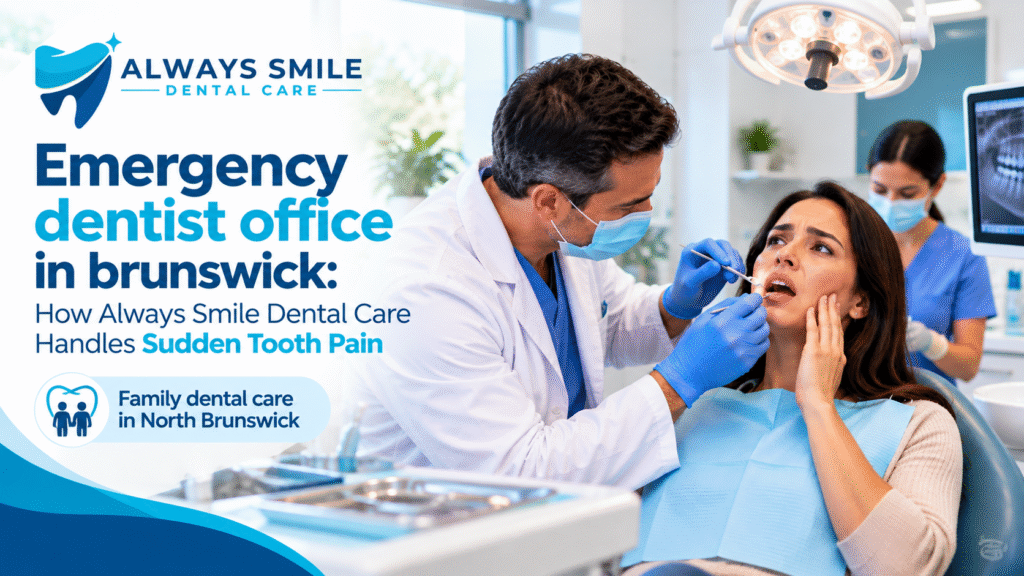
Sudden tooth pain can interrupt your day, make eating uncomfortable, and leave you wondering what to do next. A toothache may develop because of decay, a damaged tooth, irritation around the gums, or another dental problem that needs professional attention. Knowing how to respond can help you protect your oral health and decide when to seek care.
If you are searching for an emergency dentist office in Brunswick , Always Smile Dental Care in North Brunswick, New Jersey, is a practice you can contact to ask about your symptoms and appointment availability. The right next step depends on the severity of your pain and whether other warning signs are present.
Quick Guide: What Should You Do for Sudden Tooth Pain?
- Contact a dental professional if the pain is severe, persistent, or getting worse.
- Rinse gently with warm water and keep the area clean.
- Avoid chewing on the painful side and stay away from foods that trigger sensitivity.
- Do not place aspirin directly against the tooth or gums.
- Seek urgent medical attention for difficulty breathing or swallowing or rapidly spreading swelling.
What Can Cause Sudden Tooth Pain?
Tooth pain can have several causes, and the sensation alone may not reveal the underlying problem. A dental examination can help identify the source and determine whether treatment is needed.
Tooth Decay or a Cavity
A cavity can cause sensitivity to cold drinks, hot foods, or sweets. As decay progresses, discomfort may become more frequent or persistent. A dentist can assess the affected tooth and explain appropriate treatment options.
A Cracked, Chipped, or Damaged Tooth
Biting down on something hard, an accident, or everyday wear can damage a tooth. You may notice sharp pain when chewing or sensitivity to temperature changes. Avoid putting pressure on the affected tooth and arrange a dental assessment.
Gum Irritation or Infection
Inflamed gums may cause tenderness, bleeding, or discomfort around a tooth. In some cases, pain and swelling can be signs of a dental infection that requires prompt evaluation.
Dental Sensitivity
Exposed tooth surfaces or worn enamel may cause brief discomfort when you eat or drink something hot, cold, or sweet. New, intense, or worsening sensitivity should be assessed rather than assumed to be harmless.
When Should You Contact an Emergency Dentist?
Do not ignore severe or persistent dental pain. Contact a dentist promptly if you experience any of the following symptoms:
- Severe toothache that interferes with sleep or daily activities.
- Pain that continues or worsens despite basic care.
- Swelling around the gums, jaw, or face.
- A broken, cracked, or knocked-out permanent tooth.
- Pus, an unpleasant taste, or other possible signs of infection.
- Fever occurring alongside dental pain or swelling.
- Bleeding or injury involving the mouth that does not settle.
Important: Recognize a Medical Emergency
Difficulty breathing or swallowing, rapidly spreading swelling of the face or neck, or swelling around the eye can indicate a serious emergency. Seek emergency medical care immediately. Do not wait for a routine dental appointment.
How to Manage Tooth Pain Before Your Appointment
Home care may offer temporary comfort, but it cannot treat every cause of tooth pain. While arranging professional advice, consider these precautions.
1. Rinse Gently With Warm Water
Gently rinsing your mouth with warm water may help clear food particles. If food is trapped between teeth, carefully floss around the area without forcing the floss into painful or swollen tissue.
2. Avoid Foods That Trigger Pain
Choose soft foods and avoid very hot, cold, sweet, or hard items if they increase your discomfort. Chew on the opposite side when possible until you receive dental advice.
3. Consider a Cold Compress for Swelling
If there is swelling after an injury, a cold compress wrapped in a cloth may provide temporary relief when applied externally to the cheek. Do not apply ice directly to the tooth or skin.
4. Use Medicines Carefully
Ask a pharmacist or healthcare professional whether an over-the-counter pain reliever is appropriate for you. Follow the product label and consider existing medical conditions, allergies, pregnancy, and other medicines you take. Never put aspirin directly on the tooth or gums, as it can injure the tissue.
How Always Smile Dental Care Can Help With Sudden Tooth Pain
When sudden tooth pain develops, a dental evaluation can help determine the likely cause and identify suitable next steps. Always Smile Dental Care serves patients in North Brunswick, New Jersey. You can contact the practice to describe your symptoms and ask whether an appointment is available.
Depending on the findings, a dentist may discuss treatment for tooth decay, a damaged tooth, gum concerns, or another condition. The appropriate treatment depends on the diagnosis, the extent of the problem, and your individual dental needs.
Learn more about the practice and its services at Always Smile Dental Care’s official website . If you need ongoing oral health support, you can also ask about its preventive dentistry services in North Brunswick .
What to Expect During an Emergency Dental Evaluation
The exact process depends on your symptoms and the reason for your visit. A dental evaluation may involve:
- Discussing when the pain started and what makes it worse.
- Examining the affected tooth, nearby teeth, and gums.
- Checking for visible damage, swelling, or signs of infection.
- Taking dental X-rays if needed to assess the problem.
- Explaining the findings and discussing appropriate treatment options.
Tell the dental team about any medications you take, allergies, recent dental procedures, and other relevant medical information. These details can help inform your care.
How to Reduce the Risk of Future Toothaches
Not every dental emergency can be prevented, but consistent oral care can help reduce the risk of problems that cause tooth pain.
- Brush twice daily with fluoride toothpaste.
- Clean between your teeth every day.
- Attend routine dental checkups as recommended for your needs.
- Limit frequent sugary snacks and drinks.
- Wear a suitable mouthguard during contact sports.
- Ask your dentist about persistent sensitivity or discomfort before it worsens.
Contact Always Smile Dental Care About Your Tooth Pain
Sudden tooth pain can have several causes, and the best response is to have the problem assessed rather than relying on guesswork. If you need dental guidance in North Brunswick, contact Always Smile Dental Care to ask about your symptoms, appointment availability, and the next steps for evaluation.
Experiencing Sudden Tooth Pain?
Contact Always Smile Dental Care to ask about dental evaluation and available appointments in North Brunswick, NJ.
Visit Official Website Get DirectionsFrequently Asked Questions
What should I do if my tooth starts hurting suddenly?
Rinse gently with warm water, avoid chewing on the painful side, and contact a dentist if the pain is severe, persistent, or worsening. Seek emergency medical care if you have difficulty breathing or swallowing or rapidly spreading swelling.
Can a toothache go away without treatment?
Pain may temporarily improve, but this does not always mean the underlying cause has resolved. Persistent or recurring pain should be evaluated by a dentist.
Does facial swelling with a toothache need urgent attention?
Yes. Contact a dentist promptly for facial or gum swelling. If swelling spreads rapidly or affects breathing or swallowing, seek emergency medical care immediately.
Can I take pain medicine before seeing a dentist?
Some over-the-counter medicines may provide temporary relief, but suitability depends on your health and other medications. Follow the label and ask a pharmacist or healthcare professional if you are unsure.
How do I contact an emergency dentist office in Brunswick?
Visit Always Smile Dental Care’s website to find the practice’s contact details and ask about current appointment availability. Emergency appointments should be confirmed directly with the practice.
Disclaimer: This article is for general educational purposes only and does not replace a dental examination, diagnosis, or individualized medical advice.
