

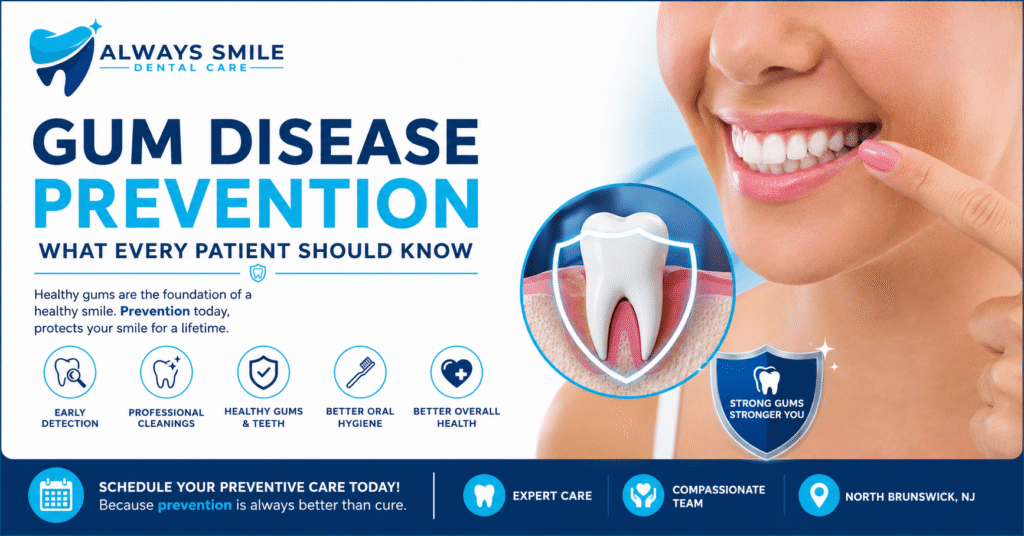
When people think about oral health, they often focus on cavities and bright white teeth. However, one of the biggest threats to your smile is something many people don’t notice until it’s already advanced—gum disease.
Gum disease affects millions of adults every year and remains one of the leading causes of tooth loss. The good news? It is largely preventable with the right habits and professional dental care.
At Always Smile Dental Care, we strongly believe that prevention is always better than treatment. Through Preventive Dentistry In North Brunswick, patients can significantly reduce their risk of gum disease while maintaining healthy teeth and gums for life.
In this comprehensive guide, we’ll explain everything every patient should know about gum disease prevention, including causes, symptoms, treatment options, daily oral care tips, and why routine dental visits are essential.
What Is Gum Disease?
Gum disease, also known as periodontal disease, is an infection of the tissues surrounding and supporting your teeth.
It begins when plaque—a sticky film filled with bacteria—builds up around the gumline. If plaque isn’t removed through brushing, flossing, and professional cleanings, it hardens into tartar, which irritates the gums and leads to inflammation.
Without treatment, the infection can spread deeper below the gums, damaging bone and connective tissue.
This is exactly why Preventive Dentistry In North Brunswick focuses on early detection before irreversible damage occurs.
The Two Stages of Gum Disease
1. Gingivitis
Gingivitis is the earliest stage of gum disease.
Signs include:
- Red gums
- Puffy gums
- Bleeding while brushing
- Bleeding when flossing
- Mild bad breath
The positive news is that gingivitis is completely reversible with proper dental care.
2. Periodontitis
If gingivitis goes untreated, it progresses into periodontitis.
At this stage:
- Gums pull away from teeth
- Deep pockets form
- Bone begins deteriorating
- Teeth loosen
- Tooth loss may occur
Once bone is lost, it cannot naturally regenerate, making prevention incredibly important.
Why Gum Disease Is So Common
Many patients don’t experience pain during the early stages.
As a result, gum disease often develops silently for months—or even years.
Common reasons include:
- Poor brushing habits
- Inconsistent flossing
- Smoking
- Diabetes
- Dry mouth
- Poor nutrition
- Hormonal changes
- Genetics
- Stress
- Skipping dental checkups
Routine visits through Preventive Dentistry In North Brunswick allow dentists to identify these issues before they become serious.
Early Warning Signs You Should Never Ignore
Contact your dentist immediately if you notice:
- Bleeding gums
- Swollen gums
- Tender gums
- Persistent bad breath
- Loose teeth
- Gum recession
- Tooth sensitivity
- Pain while chewing
- Pus around teeth
- Changes in your bite
Early diagnosis dramatically improves treatment outcomes.
What Causes Gum Disease?
The primary cause is plaque buildup.
However, several risk factors increase susceptibility.
Poor Oral Hygiene
Inadequate brushing allows bacteria to multiply rapidly.
Smoking
Smoking weakens the immune system and reduces blood flow to the gums.
Smokers have a much higher risk of severe periodontal disease.
Diabetes
High blood sugar encourages bacterial growth while slowing healing.
Hormonal Changes
Pregnancy, menopause, and puberty may increase gum sensitivity.
Certain Medications
Some medications reduce saliva production, creating an environment where bacteria thrive.
Stress
Stress weakens immune defenses, making infections more likely.
The Connection Between Gum Disease and Overall Health
Your mouth reflects your overall health.
Research has shown links between periodontal disease and numerous medical conditions.
These include:
- Heart disease
- Stroke
- Diabetes
- Respiratory infections
- Pregnancy complications
Reducing inflammation in the mouth may contribute to better overall wellness, reinforcing the importance of preventive dental care.
How Preventive Dentistry Helps Stop Gum Disease
One of the primary goals of Preventive Dentistry In North Brunswick is stopping gum disease before it starts.
Professional preventive care includes:
- Comprehensive exams
- Digital X-rays
- Oral cancer screenings
- Professional cleanings
- Fluoride treatments
- Gum evaluations
- Personalized oral hygiene education
- Risk assessment
These routine visits allow dentists to detect plaque buildup, gingivitis, and early periodontal issues before they become severe.
Professional Dental Cleanings Matter
Even excellent brushing cannot remove hardened tartar.
Professional cleanings eliminate:
- Plaque
- Tartar
- Surface stains
- Harmful bacteria
Benefits include:
- Fresher breath
- Reduced inflammation
- Healthier gums
- Lower cavity risk
- Brighter smile
Regular cleanings are one of the most effective ways to prevent gum disease.
The Importance of Dental Exams
Dental exams involve much more than checking for cavities.
Your dentist evaluates:
- Gum pocket depth
- Bone health
- Tooth mobility
- Bite alignment
- Gum recession
- Signs of infection
Early intervention is always easier—and less expensive—than treating advanced disease.
Digital X-Rays Detect Hidden Problems
Many periodontal issues begin below the gumline.
Digital X-rays help identify:
- Bone loss
- Hidden infections
- Impacted teeth
- Abscesses
- Deep decay
Modern digital imaging uses minimal radiation while providing valuable diagnostic information.
Daily Habits That Prevent Gum Disease
Professional care works best when combined with excellent home care.
Brush Twice Daily
Brush for two minutes using fluoride toothpaste.
Hold the toothbrush at a 45-degree angle toward the gums.
Floss Every Day
Floss removes bacteria between teeth where toothbrushes cannot reach.
Daily flossing significantly reduces plaque accumulation.
Use Antibacterial Mouthwash
A therapeutic mouth rinse helps reduce harmful bacteria.
It also freshens breath while lowering inflammation.
Replace Your Toothbrush
Replace every:
- Three months
- After illness
- When bristles become worn
Stay Hydrated
Saliva naturally protects teeth by washing away bacteria.
Drink plenty of water throughout the day.
Foods That Promote Healthy Gums
Nutrition plays an important role in oral health.
Choose foods rich in:
Vitamin C
Examples:
- Oranges
- Strawberries
- Kiwi
- Bell peppers
Calcium
Sources include:
- Yogurt
- Cheese
- Milk
- Almonds
Vitamin D
Supports calcium absorption.
Found in:
- Fish
- Eggs
- Fortified dairy
Crunchy Vegetables
Examples:
- Carrots
- Celery
- Cucumbers
These stimulate saliva production while naturally cleaning teeth.
Foods That Increase Gum Disease Risk
Limit:
- Sugary beverages
- Candy
- Sticky snacks
- Soft drinks
- Excessive alcohol
- Highly processed foods
These encourage bacterial growth and plaque formation.
Smoking and Gum Disease
Smoking remains one of the biggest contributors to periodontal disease.
It:
- Slows healing
- Weakens immunity
- Reduces oxygen supply
- Masks early symptoms
- Increases tooth loss risk
Quitting smoking dramatically improves long-term oral health.
Gum Disease During Pregnancy
Hormonal changes can make gums more sensitive.
Pregnant women often experience:
- Swollen gums
- Bleeding gums
- Pregnancy gingivitis
Routine preventive care helps protect both mother and baby.
Diabetes and Periodontal Disease
The relationship works both ways.
Diabetes increases gum disease risk.
Severe gum disease also makes blood sugar more difficult to control.
Patients with diabetes benefit greatly from consistent preventive dental care.
Gum Disease in Seniors
Older adults face increased risks due to:
- Dry mouth
- Gum recession
- Medications
- Reduced dexterity
Preventive visits help seniors maintain comfortable, functional smiles for years.
Can Children Develop Gum Disease?
Yes.
Although severe periodontal disease is uncommon in children, gingivitis is surprisingly common.
Teaching children proper brushing habits early builds a foundation for lifelong oral health.
How Often Should You Visit the Dentist?
Most patients benefit from dental visits every six months.
However, patients with:
- Diabetes
- Smoking history
- Previous gum disease
- Heavy tartar buildup
may require more frequent cleanings based on individualized risk assessments.
Benefits of Preventive Dentistry
Choosing Preventive Dentistry In North Brunswick provides numerous long-term benefits:
- Lower dental costs
- Reduced tooth loss
- Early disease detection
- Healthier gums
- Fresher breath
- Stronger teeth
- Improved overall health
- Greater confidence
- Better chewing ability
- Long-lasting natural smile
Why Choose Always Smile Dental Care?
At Always Smile Dental Care, prevention is at the heart of every treatment plan.
Patients receive:
- Comprehensive preventive exams
- Gentle professional cleanings
- Advanced digital diagnostics
- Personalized oral hygiene guidance
- Gum disease screenings
- Modern dental technology
- Compassionate, patient-centered care
The practice is committed to helping families in North Brunswick maintain healthy smiles through proactive preventive dentistry.
Final Thoughts
Gum disease is one of the most common oral health problems, yet it is also one of the most preventable. By maintaining excellent oral hygiene, eating a balanced diet, avoiding tobacco, and scheduling regular dental visits, you can greatly reduce your risk of developing periodontal disease.
If you’re looking for trusted Preventive Dentistry In North Brunswick, the experienced team at Always Smile Dental Care is dedicated to protecting your smile through personalized preventive care, early diagnosis, and patient education. Taking action today can help preserve your natural teeth, improve your overall health, and keep your smile healthy for years to come.
Regular preventive care isn’t just about avoiding dental problems—it’s an investment in your lifelong health and confidence.
Frequently Asked Questions
Gum disease, also known as periodontal disease, is an infection of the gums caused by plaque and bacteria buildup. If left untreated, it can damage the gums, bone, and supporting tissues, potentially leading to tooth loss.
Common early symptoms include:
Bleeding gums while brushing or flossing
Red or swollen gums
Persistent bad breath
Tender gums
Gum recession
Increased tooth sensitivity
Preventive Dentistry In North Brunswick includes regular dental exams, professional cleanings, digital X-rays, fluoride treatments, and personalized oral hygiene guidance to detect and prevent gum disease before it becomes severe.
Most patients should visit the dentist every six months for preventive checkups and cleanings. Patients with diabetes, a history of gum disease, or other risk factors may require more frequent visits.
Yes. Gingivitis, the earliest stage of gum disease, is reversible with proper oral hygiene and professional dental care. Advanced periodontitis requires ongoing treatment to manage the condition and prevent further damage.
Yes. Research has linked gum disease to several health conditions, including heart disease, diabetes, stroke, respiratory infections, and pregnancy complications. Maintaining healthy gums supports overall wellness.
To reduce your risk:
Brush twice daily with fluoride toothpaste.
Floss every day.
Use an antibacterial mouthwash.
Eat a balanced diet.
Avoid tobacco products.
Schedule regular dental checkups and cleanings.
At Always Smile Dental Care, we provide comprehensive preventive services, including routine exams, professional cleanings, digital diagnostics, and personalized care plans to help patients maintain healthy gums and long-lasting smiles.
How To Prevent Gum Disease: Step-by-Step Guide
- Brush Your Teeth Twice Every Day
Use a soft-bristled toothbrush and fluoride toothpaste. Brush for at least two minutes, paying close attention to the gumline to remove plaque effectively
- Floss Daily
Floss between every tooth once a day to remove plaque and food particles that your toothbrush cannot reach.
- Use an Antibacterial Mouthwash
Rinse with an antibacterial mouthwash after brushing and flossing to help reduce harmful bacteria and freshen your breath.
- Maintain a Healthy Diet
Eat foods rich in calcium, vitamin C, and vitamin D while limiting sugary snacks and beverages that contribute to plaque buildup.
- Avoid Smoking and Tobacco Products
Smoking significantly increases your risk of gum disease and slows the healing process. Quitting tobacco can greatly improve your oral health.
- Schedule Regular Dental Checkups
Visit Always Smile Dental Care every six months for professional cleanings, comprehensive exams, and early detection of gum disease.
- Follow Your Dentist’s Recommendations
If your dentist identifies early signs of gum disease, follow the recommended treatment plan and maintain good oral hygiene at home to prevent progression.
- Protect Your Smile with Preventive Dentistry In North Brunswick
Consistent preventive care is the best way to maintain healthy gums, prevent tooth loss, and enjoy a confident smile for years to come.
