

Many people become anxious when they hear the words “root canal.” For decades, root canal therapy has been surrounded by myths that make patients believe the procedure is painful or that tooth extraction is a better alternative. The truth is quite the opposite. Modern root canal therapy is one of the safest and most effective dental procedures available today, helping millions of patients save their natural teeth every year.
If you’re experiencing severe tooth pain, prolonged sensitivity, or swelling around a tooth, you may need Root Canal Treatment In North Brunswick. Rather than removing the damaged tooth, root canal therapy eliminates infection while preserving your natural smile, allowing you to continue eating, speaking, and smiling comfortably.
At Always Smile Dental Care, we believe preserving your natural teeth whenever possible is always the best solution. Our experienced dental team uses advanced technology and gentle techniques to make root canal treatment comfortable, efficient, and highly successful. The practice focuses on compassionate, modern dental care designed to keep patients comfortable while restoring healthy smiles.
What Is Root Canal Therapy?
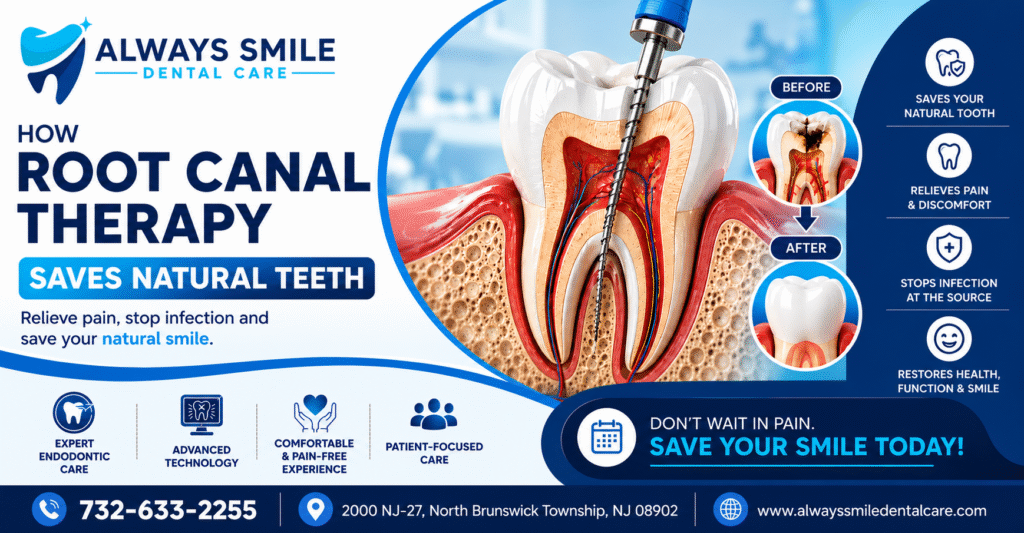
A root canal is a restorative dental procedure performed when the soft tissue inside your tooth, known as the dental pulp, becomes infected or inflamed.
The pulp contains:
- Blood vessels
- Nerves
- Connective tissues
Although the pulp plays an important role during tooth development, mature teeth can survive without it because they continue receiving nutrients through surrounding tissues.
During root canal therapy, your dentist carefully removes the infected pulp, disinfects the inside of the tooth, seals it, and restores its strength with a dental filling or crown.
The result is a healthy, functional tooth that can often last a lifetime with proper care.
Why Saving Your Natural Tooth Matters
Many patients assume extracting a damaged tooth is simpler than repairing it.
However, dentists almost always recommend saving natural teeth whenever possible.
Natural teeth provide benefits that artificial replacements simply cannot fully duplicate.
Better Chewing Function
Your natural tooth allows normal biting pressure and efficient chewing.
Replacing missing teeth often requires additional restorative procedures.
Maintains Jawbone Health
Natural tooth roots stimulate the jawbone every time you chew.
Removing a tooth causes bone loss over time, which may change facial appearance.
Prevents Teeth from Shifting
When a tooth is extracted, neighboring teeth begin moving into the empty space.
This can lead to:
- Bite problems
- Crowding
- Difficulty cleaning teeth
- Increased risk of decay
More Cost-Effective
Although extraction may initially seem less expensive, replacing the missing tooth often involves:
- Dental implants
- Bridges
- Partial dentures
These treatments typically cost much more than saving your natural tooth.
What Causes a Tooth to Need Root Canal Therapy?
Several conditions can damage the dental pulp.
The most common causes include:
Deep Tooth Decay
Untreated cavities gradually spread deeper into the tooth.
Once bacteria reach the pulp, infection develops.
Cracked Teeth
A cracked tooth allows bacteria to enter the inner chamber.
Even small cracks can eventually cause pulp infection.
Dental Trauma
Sports injuries, falls, or accidents may damage the tooth’s nerve without immediately causing visible damage.
Repeated Dental Procedures
Multiple fillings or restorations on the same tooth may weaken the pulp over time.
Large Fillings
Old fillings may leak bacteria, leading to infection.
Signs You May Need Root Canal Treatment
Early treatment improves the likelihood of saving your tooth.
Common symptoms include:
Persistent Tooth Pain
Pain that doesn’t go away is one of the biggest warning signs.
Pain may worsen while:
- Chewing
- Biting
- Drinking hot beverages
- Drinking cold beverages
Prolonged Temperature Sensitivity
If sensitivity continues long after consuming hot or cold foods, the pulp may be damaged.
Swollen Gums
Swelling near a painful tooth often indicates infection.
Tooth Discoloration
A darkened tooth may signal damaged internal tissues.
Pimple on the Gum
A small bump that drains pus often indicates a dental abscess.
Tenderness While Eating
Pain during chewing usually suggests inflammation inside the tooth.
What Happens During Root Canal Treatment?
Modern Root Canal Treatment In North Brunswick is much easier than many people expect.
Step 1: Comprehensive Examination
Your dentist evaluates:
- Symptoms
- Dental X-rays
- Tooth condition
- Infection severity
Step 2: Local Anesthesia
The area is completely numbed.
Most patients report that root canal treatment feels similar to getting a filling.
Step 3: Access Opening
A tiny opening is created to reach the infected pulp.
Step 4: Cleaning the Root Canals
Special instruments remove:
- Infected tissue
- Bacteria
- Debris
The canals are thoroughly disinfected.
Step 5: Filling the Canals
The cleaned canals are sealed using a biocompatible material.
This prevents future infection.
Step 6: Restoring the Tooth
Most treated teeth receive a custom dental crown for maximum protection and long-term durability.
Is Root Canal Treatment Painful?
One of the biggest myths surrounding root canals is that they are extremely painful.
Modern dentistry has transformed the procedure.
Thanks to:
- Advanced anesthetics
- Digital imaging
- Improved dental instruments
- Gentle techniques
Most patients experience little to no discomfort during treatment.
Ironically, root canal therapy actually relieves the severe pain caused by infection.
Benefits of Root Canal Therapy
Preserves Your Natural Smile
Nothing looks or functions like your own tooth.
Saving it is always preferable whenever possible.
Stops Infection
Removing infected pulp eliminates harmful bacteria.
Prevents Tooth Extraction
Root canal treatment often saves teeth that would otherwise require removal.
Restores Comfortable Chewing
Patients regain normal function without pain.
Protects Surrounding Teeth
Keeping the natural tooth prevents shifting and bite problems.
Long-Term Success
With proper care, root canal-treated teeth can last decades or even a lifetime.
Root Canal vs Tooth Extraction
| Root Canal | Tooth Extraction |
|---|---|
| Saves natural tooth | Removes tooth permanently |
| Maintains bite alignment | Teeth may shift |
| Preserves jawbone | Bone loss begins |
| No replacement needed | Implant or bridge usually required |
| Lower long-term cost | Replacement increases costs |
Dentists generally recommend preserving natural teeth whenever possible because it supports long-term oral health.
What Happens If You Delay Treatment?
Ignoring an infected tooth allows bacteria to spread.
Possible complications include:
- Dental abscess
- Bone loss
- Severe swelling
- Facial infection
- Tooth loss
- Damage to neighboring teeth
Early treatment prevents these serious complications.
Recovery After Root Canal Therapy
Recovery is usually straightforward.
Patients should:
- Avoid chewing on the treated tooth until fully restored.
- Brush twice daily.
- Floss every day.
- Attend follow-up appointments.
- Take medications exactly as prescribed.
- Return for the permanent crown if recommended.
Most people resume normal activities the next day.
How Long Does a Root Canal Last?
A successfully treated tooth can remain healthy for decades.
Longevity depends on:
- Oral hygiene
- Regular dental visits
- Wearing a crown if recommended
- Avoiding chewing hard objects
- Treating cavities early
Many patients keep their treated teeth for life.
Who Is a Candidate for Root Canal Therapy?
You may benefit from Root Canal Treatment In North Brunswick if you have:
- Severe toothache
- Deep cavity
- Dental abscess
- Cracked tooth
- Tooth injury
- Lingering sensitivity
- Swollen gums
Only a professional dental examination can determine whether root canal therapy is appropriate.
How to Prevent Future Root Canal Treatment
Good oral hygiene greatly reduces the risk of infection.
Follow these habits:
Brush Twice Daily
Use fluoride toothpaste for two minutes.
Floss Every Day
Floss removes bacteria between teeth where brushing cannot reach.
Visit Your Dentist Regularly
Routine cleanings help detect problems before they become serious.
Wear a Mouthguard
Protect teeth during sports activities.
Limit Sugary Foods
Reducing sugar lowers cavity risk.
Treat Cavities Early
Small fillings are much easier than root canal therapy.
Why Choose Always Smile Dental Care for Root Canal Treatment?
Choosing the right dentist makes a significant difference in your treatment experience.
Patients choose Always Smile Dental Care because of:
- Experienced and compassionate dental professionals
- Advanced diagnostic technology
- Comfortable treatment environment
- Personalized care plans
- Gentle approach for anxious patients
- Focus on preserving natural teeth whenever possible
- Comprehensive restorative dental services under one roof
Led by Dr. Farida Fanuswala, the practice combines clinical expertise with a patient-first philosophy to deliver comfortable, personalized care for families in the North Brunswick community.
Frequently Asked Questions
How successful is root canal treatment?
Root canal therapy has a very high success rate, often exceeding 90–95% when performed properly and followed by appropriate restoration.
Will I need a crown after a root canal?
Many back teeth require crowns because they experience significant chewing pressure. Your dentist will recommend the best restoration for your specific case.
How long does treatment take?
Many root canals can be completed in one or two visits depending on the complexity of the tooth.
Can the infection come back?
Although uncommon, reinfection can occur if the restoration becomes damaged or bacteria enter the tooth again. Regular dental checkups help detect problems early.
Is extraction ever better?
Extraction may be necessary if a tooth cannot be restored. However, whenever possible, preserving the natural tooth is generally the preferred treatment.
Final Thoughts
Root canal therapy is one of the most effective ways to save a damaged or infected tooth while protecting your long-term oral health. Rather than fearing the procedure, patients should view it as an opportunity to preserve their natural smile, eliminate pain, and avoid more extensive dental treatments in the future.
If you’re experiencing persistent tooth pain, swelling, or sensitivity, don’t wait until the problem worsens. Early diagnosis and treatment can make all the difference.
For compassionate care and expert Root Canal Treatment In North Brunswick, trust Always Smile Dental Care to restore your comfort and protect your smile with modern, patient-focused dentistry. Learn more or schedule an appointment here: https://alwayssmiledentalcare.com/services/root-canal-treatment-in-north-brunswick
FAQ`s
Root canal treatment is a dental procedure that removes infected or damaged pulp from inside a tooth, cleans and disinfects the root canals, and seals the tooth to prevent future infection. It helps save your natural tooth and restore its function.
You may need Root Canal Treatment In North Brunswick if you experience persistent tooth pain, prolonged sensitivity to hot or cold foods, swollen gums, tooth discoloration, or a dental abscess. A dentist can confirm the need for treatment after an examination and X-rays.
No. Modern root canal therapy is performed under local anesthesia, making the procedure comfortable for most patients. In fact, the treatment relieves the pain caused by an infected tooth rather than causing it.
Most root canal procedures take between 60 and 90 minutes. Depending on the complexity of the infection and the tooth being treated, your dentist may complete the treatment in one or two visits.
Saving your natural tooth helps maintain proper chewing function, preserves your jawbone, prevents neighboring teeth from shifting, and eliminates the need for more expensive tooth replacement options like implants or bridges.
Root canal therapy has a success rate of over 90% when performed by an experienced dentist and followed by proper oral hygiene and regular dental checkups.
In many cases, especially for molars and premolars, a dental crown is recommended after root canal treatment to strengthen and protect the treated tooth from fractures.
With proper oral hygiene, regular dental visits, and a well-fitted crown if recommended, a root canal-treated tooth can last for many years or even a lifetime.
Delaying treatment can allow the infection to spread, leading to severe pain, swelling, bone loss, abscess formation, and eventually tooth loss. Early treatment offers the best chance of saving your natural tooth.
Always Smile Dental Care offers advanced diagnostic technology, gentle treatment techniques, experienced dental professionals, and personalized care focused on preserving your natural teeth while ensuring your comfort throughout the procedure.
How-To Guide: How Root Canal Therapy Saves Your Natural Tooth
- Schedule a Dental Examination
If you experience persistent tooth pain, swelling, or sensitivity, visit your dentist promptly for a thorough examination and digital X-rays to determine whether root canal treatment is needed.
- Diagnose the Infection
Your dentist will evaluate the condition of the tooth, assess the extent of infection, and develop a personalized treatment plan to save your natural tooth.
- Receive Local Anesthesia
Before the procedure begins, the treatment area is completely numbed using local anesthesia to ensure a comfortable and virtually pain-free experience.
- Remove the Infected Dental Pulp
A small opening is created in the tooth, allowing the dentist to remove the infected or damaged pulp from inside the root canals.
- Clean and Disinfect the Root Canals
Specialized dental instruments are used to thoroughly clean, shape, and disinfect the root canals, eliminating bacteria and infected tissue.
- Seal the Tooth
The cleaned canals are filled with a biocompatible material and sealed to prevent bacteria from re-entering the tooth.
- Restore the Tooth
Depending on the condition of the tooth, a filling or custom-made dental crown is placed to restore its strength, appearance, and chewing function.
- Maintain Good Oral Hygiene
Brush twice daily, floss every day, avoid chewing hard objects, and visit your dentist regularly to help your treated tooth remain healthy for many years.
