

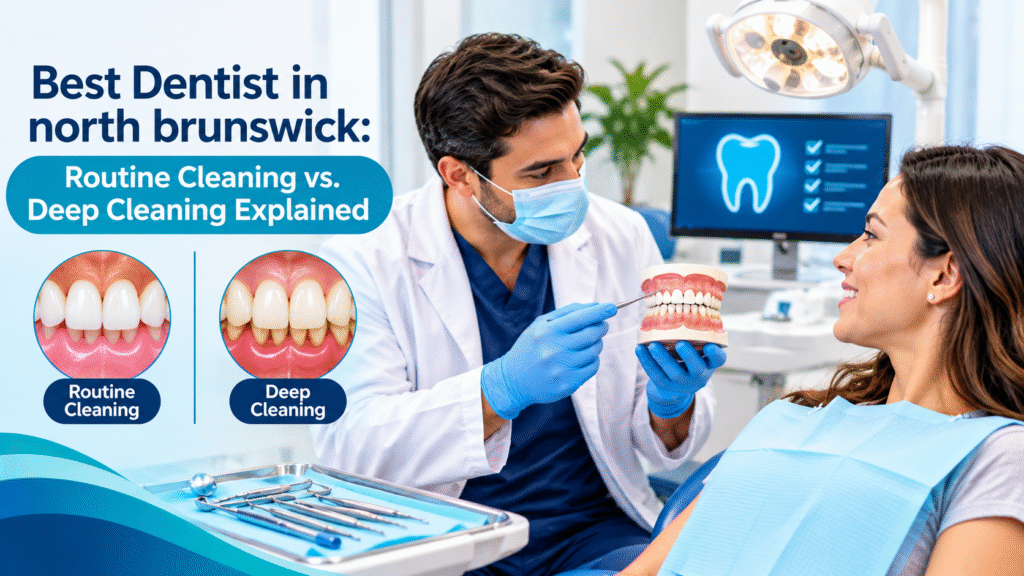
Keeping your teeth clean involves more than brushing twice a day. Professional dental cleanings help remove plaque and hardened deposits that regular brushing cannot completely eliminate. However, not every patient needs the same type of cleaning. Some people benefit from routine preventive care, while others may need a deeper procedure to address buildup below the gumline.
Understanding the difference can help you have a more informed conversation about your oral health. If you are looking for a Dentist office in North Brunswick , Always Smile Dental Care can be contacted to learn about available services and ask which type of dental evaluation may be appropriate for your needs.
Quick Answer: Routine Cleaning vs. Deep Cleaning
- Routine cleaning: Removes plaque and tartar from tooth surfaces and around the gumline as part of preventive care.
- Deep cleaning: Also called scaling and root planing, it removes plaque and tartar from below the gumline and smooths root surfaces when indicated for gum disease.
- Which do you need? A dental examination, including assessment of your gums, helps determine the appropriate approach.
What Is a Routine Dental Cleaning?
A routine dental cleaning is a preventive procedure designed to remove plaque, tartar, and surface deposits from the teeth. Plaque is a sticky film of bacteria that forms naturally. When it is not removed effectively, it can harden into tartar, which cannot be eliminated through ordinary brushing alone.
During a professional cleaning, a dental hygienist or other qualified dental professional cleans accessible tooth surfaces and the areas around the gumline. The appointment may also include polishing and personalized advice about brushing and flossing.
Who Usually Benefits From Routine Cleaning?
Routine cleaning is generally appropriate for patients whose preventive care needs can be managed without periodontal treatment. Your recommended cleaning schedule depends on your oral health, tartar buildup, gum condition, and individual risk factors.
What Is Deep Cleaning?
Deep cleaning, clinically known as scaling and root planing, is a periodontal treatment used when plaque and tartar have accumulated beneath the gumline and gum disease has created deeper spaces around the teeth.
Scaling removes deposits from tooth surfaces above and below the gumline. Root planing smooths the root surfaces to help remove bacterial deposits and support healthier gum tissue. The dentist or periodontal professional determines the areas requiring treatment based on a clinical assessment.
When Might Deep Cleaning Be Recommended?
Deep cleaning may be recommended when an examination reveals signs of periodontal disease. These may include gum pockets, bleeding, inflammation, or bone changes associated with gum disease. The recommendation should be based on clinical findings, not simply on a preference for a more extensive cleaning.
Routine Cleaning vs. Deep Cleaning: Key Differences
| Feature | Routine Cleaning | Deep Cleaning |
|---|---|---|
| Main purpose | Preventive maintenance | Treatment of periodontal disease when indicated |
| Area treated | Accessible tooth surfaces and around the gumline | Tooth surfaces below the gumline and affected root areas |
| Typical reason | Regular oral hygiene maintenance | Gum pockets and deposits associated with gum disease |
| Numbing | Usually not required | Local anesthetic may be used for comfort |
| Follow-up | Based on preventive care needs | May include periodontal reassessment and maintenance visits |
Signs You May Need More Than a Routine Cleaning
Gum disease can develop gradually, and early symptoms are not always painful. Pay attention to changes in your gums and ask a dental professional to evaluate symptoms that continue or recur.
- Gums that bleed regularly during brushing or flossing.
- Persistent gum redness, swelling, or tenderness.
- Gums that appear to pull away from the teeth.
- Persistent bad breath or an unpleasant taste.
- Teeth that feel loose or changes in the way your teeth fit together.
- A history of periodontal disease or previous deep cleaning.
These signs do not confirm that you need deep cleaning. An examination and periodontal measurements help the dental professional assess the condition of your gums and recommend appropriate care.
Does Deep Cleaning Hurt?
Comfort varies depending on gum inflammation, sensitivity, and the amount of treatment needed. Local anesthesia may be offered during deep cleaning to make the procedure more comfortable. Some tenderness, sensitivity, or mild gum soreness may occur afterward.
Follow the aftercare instructions provided by your dental team. Ask which foods, oral hygiene products, or pain relief options are suitable for you, especially if you have medical conditions or take other medications.
How Often Should You Have Your Teeth Cleaned?
Many patients attend routine dental visits every six months, but this schedule is not right for everyone. Your dentist may recommend a different interval based on plaque buildup, gum health, medical history, and risk of dental disease.
After deep cleaning, patients with periodontal disease may need more frequent periodontal maintenance visits. These appointments help monitor gum health and manage the risk of disease progression. Follow the schedule recommended for your specific condition.
Choosing a Dental Office in North Brunswick
When comparing a Dental office in north brunswick, look for a practice that explains its findings clearly, answers your questions, and bases treatment recommendations on an examination. You should understand why a cleaning is recommended, what it involves, and what follow-up care may be needed.
If you are searching for the Best Dentist in north brunswick or the Best dentist near me, consider the practice’s services, appointment availability, patient communication, location, and approach to preventive care. Ask about fees and insurance coverage directly before treatment.
When Should You Seek Emergency Dental Care?
Routine cleaning and deep cleaning are different from urgent treatment for an acute dental problem. Severe tooth pain, significant swelling, a broken tooth, or possible signs of infection should be assessed promptly by a dental professional.
If you need an emergency dentist office in brunswick , contact a dental practice to explain your symptoms and ask about appointment availability. Ask what emergency dental services may be available for your situation. Difficulty breathing or swallowing, or rapidly spreading facial or neck swelling, requires immediate emergency medical care.
How to Maintain Healthy Teeth and Gums Between Visits
- Brush twice a day with fluoride toothpaste.
- Clean between your teeth daily using floss or an appropriate interdental cleaner.
- Follow your dentist’s advice for cleaning along the gumline.
- Limit frequent sugary snacks and drinks.
- Avoid tobacco products, which can affect gum health.
- Keep recommended dental and periodontal maintenance appointments.
Discuss Your Cleaning Needs With Always Smile Dental Care
Routine cleaning and deep cleaning serve different purposes. Routine cleaning helps maintain oral hygiene, while scaling and root planing may be needed to treat periodontal disease. The appropriate option depends on the condition of your teeth and gums.
Always Smile Dental Care serves patients in North Brunswick, New Jersey. Visit the official Always Smile Dental Care website to learn about the practice and ask about appointments. You can also explore its preventive dentistry services for additional information about maintaining your oral health.
Not Sure Which Dental Cleaning You Need?
Contact Always Smile Dental Care to ask about an appointment and discuss your dental cleaning and preventive care needs.
Visit Official Website Get DirectionsFrequently Asked Questions
What is the main difference between routine cleaning and deep cleaning?
Routine cleaning focuses on preventive maintenance and accessible tooth surfaces. Deep cleaning, or scaling and root planing, treats deposits below the gumline when periodontal disease makes the procedure necessary.
Does everyone need deep cleaning?
No. Deep cleaning is generally recommended when clinical findings indicate periodontal disease that requires this treatment. Your dentist can assess your gums and explain whether it is appropriate.
Can routine cleaning treat gum disease?
Routine cleaning supports oral hygiene, but it may not be sufficient when periodontal pockets and deeper deposits are present. Treatment depends on the severity of the gum condition.
How do I find the best dentist near me for dental cleaning?
Compare relevant services, patient communication, location, appointment availability, and costs. Ask the dentist to explain your gum health and the reasons for any recommended procedure.
Should I contact an emergency dentist office in Brunswick for bleeding gums?
Occasional bleeding is not always an emergency, but persistent bleeding or swollen gums should be assessed by a dentist. Severe pain, significant swelling, or possible signs of infection warrant prompt professional advice.
How can I schedule an appointment with Always Smile Dental Care?
Visit the official practice website to find contact details and ask about appointment availability and dental cleaning options.
Disclaimer: This article is for general educational purposes only. It does not replace a dental examination, diagnosis, or personalized treatment recommendations from a qualified dental professional.
